
Last Updated: November 12, 2026
Quick Summary
Science programs for small homeschool groups work best on one clear framework: pick a format that fits your space, choose a curriculum that fits your ages, and plan every session around hands-on doing. Groups of 4-8 kids are ideal for shared materials, and 60-90 minute sessions keep attention high.
- Count kids and measure your room first, because those two numbers decide the format.
- Run one thematic unit in the fall and test it before committing to a full-year kit.
- Build a science station with magnifying glasses, plastic trays, safety goggles, a kitchen scale, and clear cups.
- Confirm group size caps, registration windows, and cancellation policies in writing before booking a free program.
- Keep one hands-on backup lesson ready for every scheduled outing in case a free program cancels.
Table of Contents
- Start With a Simple Framework for Small-Group Science
- Choosing a Homeschool Co-op Science Curriculum That Fits
- Hands-On Science Activities for Elementary Students That Need Little Equipment
- Free Science Programs for Homeschool Groups and Where to Find Them
- Online Science Programs for Homeschool Groups: When Screens Help
- Booking a Museum-Grade Science Visit for Your Group
- Frequently Asked Questions
Start With a Simple Framework for Small-Group Science
Science programs for small homeschool groups work best on one clear framework: pick a format that fits your space, choose a curriculum that fits your ages, and plan every session around hands-on doing. That hands-on approach can extend from observing materials to transforming them, so plan a hands-on workshop that lets children follow a process from raw wool to usable fiber.
Small groups have one big advantage over classrooms. You can adapt fast.
- Group size: 4-8 kids is ideal for shared materials. Up to 12 works with a helper.
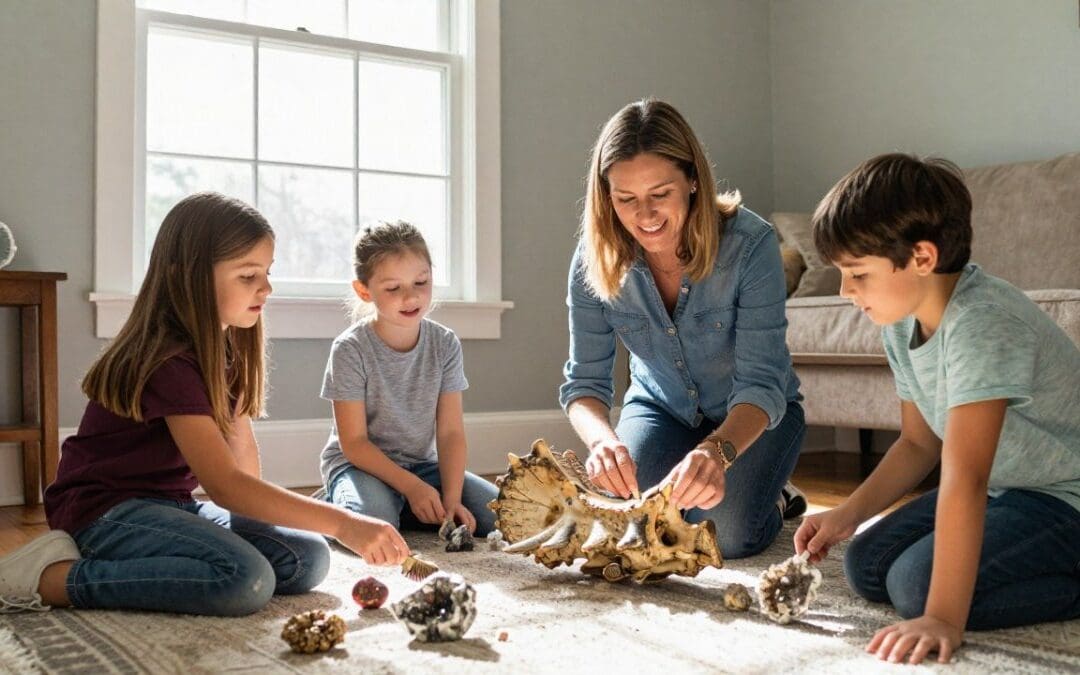
- Space: A kitchen table handles most experiments. A living room floor handles fossil digs.
- Time: 60-90 minutes per session keeps attention high.
Match the Format to Your Group Size and Space
Count kids and measure your room first. Those two numbers decide everything else.
| Group Size | Best Format | Space Needed | Adult Help |
|---|---|---|---|
| 3-5 kids | Table-top experiments | Kitchen table | 1 adult |
| 6-9 kids | Rotation stations | Living room or garage | 1-2 adults |
| 10-12 kids | Demo plus small groups | Open room or yard | 2-3 adults |
| Any size | Guest presenter visit | Open floor space | 1 host |
Watch out: cramming 12 kids around one table turns a calm experiment into chaos. Split into stations instead.
Choosing a Homeschool Co-op Science Curriculum That Fits
The right homeschool co-op science curriculum matches your group’s ages, schedule, and comfort with mess. Most published curricula assume a single grade, which co-ops rarely have, so start with your roster, not a catalog.
Build a Roster Profile Before You Shop
Before opening a catalog, write down four numbers: age spread, student count, minutes per session, and adults who will actually teach. Six kids spanning ages 6 to 11 with one parent leading is a different purchase than eight kids within two years with three rotating parents.
Mixed-age instruction is the norm in learning pods and co-ops, so look for curricula built around themes rather than grade levels.
Three Curriculum Models That Fit Small Groups
Most small-group leaders choose among three structures, each with a real trade-off.
- Thematic unit studies. One topic runs four to six weeks across all ages, with older students notebooking and recording data. Trade-off: you must build your own scope and sequence, since unit studies rarely ship as a full K-6 progression.
- Grade-banded kits with a shared lab day. Each family buys its own grade-level workbook, and the co-op meets weekly for a shared hands-on lab. Trade-off: the lab day must be designed separately, extra planning for the lead parent.
- Literature- and phenomenon-based programs. Lessons anchor to a real event or trade book, with activities branching by age. Trade-off: supply lists vary weekly, so prep time is higher than with a single kit.
Experienced co-op leaders often run one thematic unit in the fall, test it with the actual group, then commit to a full year. Buying a full-year kit before trying one unit is the most common purchasing mistake.
A Selection Checklist With Concrete Tests
Use this yes-or-no checklist before you buy anything.
- Does it cover one topic for 4-6 weeks so you can plan deeply?
- Are supplies easy to find at a grocery or hardware store, or does the kit require a specialty order?
- Does it include a science notebooking component for older kids?
That last item matters more than most buyers expect. Enrichment curricula often skip assessment entirely, leaving parents without a transcript record. If the program has no rubric, add a simple three-point notebook check for observation quality, data accuracy, and written conclusion.
Aligning With Standards Without Letting Them Drive
If your state uses NGSS or a close variant, standards are organized by disciplinary core idea and grade band (K-2, 3-5, middle school), not single grade.
Watch out: a curriculum that advertises alignment but lists only a single grade level per lesson will force you to buy multiple levels for one mixed-age group, doubling cost and prep.
Hands-On Science Activities for Elementary Students That Need Little Equipment
The best hands-on science activities for elementary students use what you already own. You do not need a lab, just curiosity and a few household items.
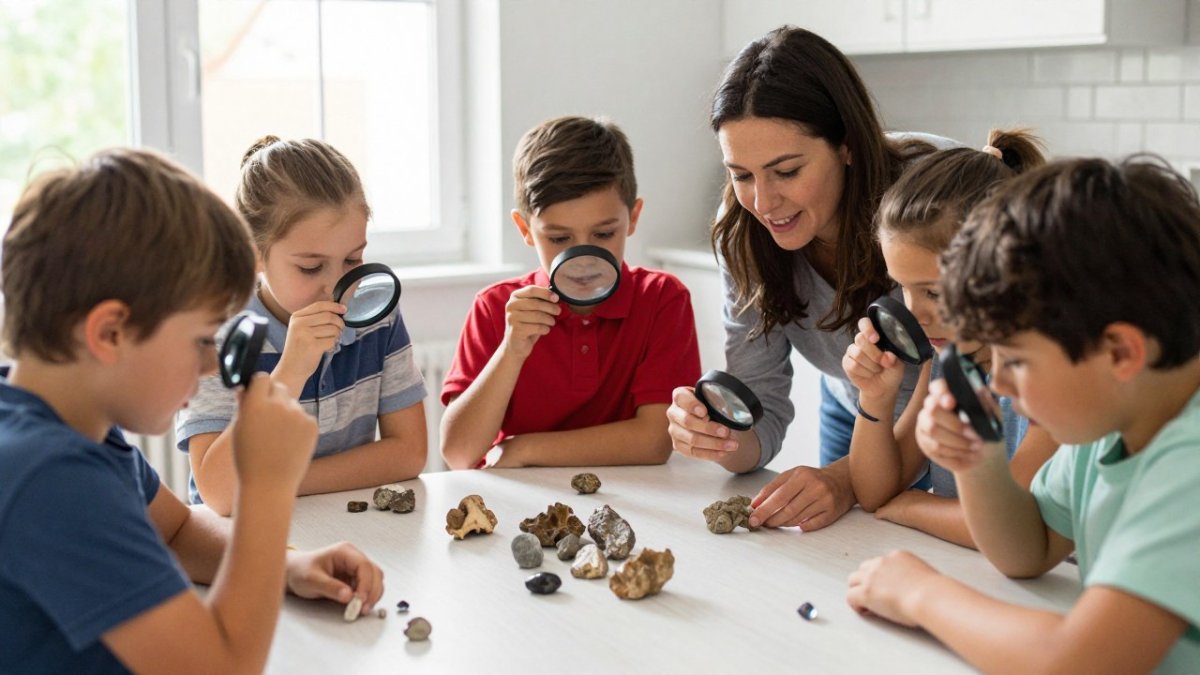
Try these five activities, each built around the scientific method:
- Fossil casting: Press shells into clay, let it harden, then compare molds to real specimens.
- Rock hardness test: Scratch rocks against a penny, a nail, and glass to rank them.
- Seed sprouting race: Grow beans in cups with different light and water amounts.
- Simple circuits: Light a bulb with a battery, wire, and tape.
- Weather journaling: Record temperature and clouds daily for two weeks.
Each one teaches experimental design: ask a question, make a guess, test it, and write down what happened.
Budget-Friendly DIY Lab Equipment and Setup
You can build a working science station for very little. Keep these on hand:
- Magnifying glasses for close observation
- Plastic trays to contain messes
- Safety goggles for every child
Store everything in one labeled bin so setup is quick. Follow basic lab safety: goggles on, no tasting, adult supervision near heat or sharp tools.
Free Science Programs for Homeschool Groups and Where to Find Them
Free science programs for homeschool groups exist in most communities, and many are closer than you think. The catch is that free programs come with eligibility rules, group caps, and registration windows that paid programs do not. Knowing those rules before you call is the difference between a booked field trip and a wasted month.
Five Sources, and What Each One Actually Requires
- Public libraries. Many library systems run STEM enrichment workshops, maker-space hours, and science demonstration days. Requirements vary by branch: some reserve slots for cardholders in the library’s service area, and most cap group size well below a full co-op. Ask whether your group can register as a single block or whether each family must sign up individually.
- State and national parks. Ranger-led field observation walks and Junior Ranger programs are typically free or low-cost, but they run on a fixed seasonal calendar and often require advance reservations for groups. Ask for the group reservation contact, not the general visitor line, and confirm whether the program runs rain or shine.
- NASA and NOAA. Both publish free lesson plans, data sets, and virtual science labs online. These are self-serve resources rather than scheduled programs, which makes them ideal for the weeks between guest visits. The NASA education resources include free activities on astronomy and earth science. The National Park Service education portal lists ranger programs and field trip options by region.
The Questions to Ask Before You Commit
Free programs fill fast, and the failure mode is showing up with ten kids and no reserved slot. Call ahead and get these five answers in writing, even just a confirmation email:
- What is the maximum group size, and does that count adults?
- Is registration per family or per group, and when does the window open?
- What is the cancellation policy if a family drops out the week before?
- Is there a minimum age, and can younger siblings attend?
- What should students bring, and is there anything they cannot bring into the program space?
Watch out: a program that says “free” but requires each family to register separately can leave your group split across sessions, so confirm group registration before you build the field trip into your calendar.
Build a Backup Plan Into the Calendar
Even a confirmed free program can cancel for weather, staffing, or low enrollment. Keep one hands-on backup lesson ready for every scheduled outing, sized to your group and space. A rock-and-fossil sorting tray or weather journaling session needs no reservation and fills a sudden gap. Groups scheduling two free programs per month with one backup lesson in reserve rarely lose a session to cancellation.
When Free Is Not the Best Value
Free programs are worth pursuing, but not always the lowest-cost option once you count drive time, registration effort, and cancellation risk. A single in-person visit with real specimens can replace several uncertain outings and gives every child something to take home. Compare the total cost of a semester of free programs, fuel, parking, chaperone admission, planning hours, against one booked visit before assuming free is cheaper.
Online Science Programs for Homeschool Groups: When Screens Help
Online science programs for homeschool groups make sense in three cases: you cannot meet in person, you need a subject no parent can teach, or you want supplemental instruction between hands-on sessions.
But screens cannot replace touching a real fossil. Use online programs as a bridge, not a substitute.
Scheduling Templates for Small Groups
A repeatable schedule removes the weekly scramble. Here are two templates that work for most co-ops:
60-Minute Session
| Time | Activity |
|---|---|
| 0-10 min | Welcome and question of the day |
| 10-25 min | Science demonstration |
| 25-45 min | Hands-on activity |
| 45-55 min | Science notebooking |
| 55-60 min | Cleanup and preview |
90-Minute Session
| Time | Activity |
|---|---|
| 0-15 min | Warm-up and review |
| 15-35 min | Mini-lesson |
| 35-65 min | Experiment stations |
| 65-80 min | Data collection and sharing |
| 80-90 min | Reflection and cleanup |
Rotate a parent helper each week. One adult manages supplies while another guides the activity.
Booking a Museum-Grade Science Visit for Your Group
A guest presenter turns a good co-op year into a memorable one.
We bring the specimens to you, and every child digs up and keeps a genuine fossil or gemstone.
Booking is simple:
- Pick a date and confirm your headcount.
- Share your space details so we can plan the setup.
- Prepare a clear floor area for the dig.
- Let kids bring a labeled bag for their specimens.
Pricing depends on group size, date, and location, so call us at (917) 375-4248 for a current quote.
Running a science co-op takes planning, but you do not have to build every session from scratch.
Frequently Asked Questions
How do you teach science to a small homeschool group?
Pick one topic per session and build a 45-60 minute block around it: a short explanation, one demonstration, then a hands-on task every child completes. Mixed-age groups work best when older kids take a data-recording or helper role. Keep group size to what your space and adult helpers can supervise, and set lab safety rules before the first experiment. Rotating stations let you run several activities without needing one adult per child.
Are there free science programs for homeschool groups?
Yes, though availability varies by area. Public libraries often host STEM enrichment workshops, and state parks and nature centers run field observation programs at low or no cost. University extension offices and local museums sometimes offer free or discounted school-group sessions. Ask about homeschool-specific slots, since many programs only advertise to public schools. Pair free outings with your own hands-on activities to fill out a full term.
What should you look for in a homeschool science program or visiting provider?
Check three things: whether the specimens are genuine, whether every child gets to handle and keep something, and whether the presenter adapts to mixed ages. Ask for recent references from groups your size, and confirm space and setup requirements in writing before booking. Real museum-grade specimens are a meaningful difference to look for in a provider.
How long should a homeschool science lesson be?
For elementary students, 45-60 minutes suits most co-op sessions, split roughly into 10 minutes of explanation, 10 of demonstration, and 30 of hands-on work. Younger children (ages 4-6) do better with 30-40 minutes and one activity. If you meet weekly, a 6-8 week block per topic gives enough time for the scientific method, data collection, and a simple wrap-up project.

