
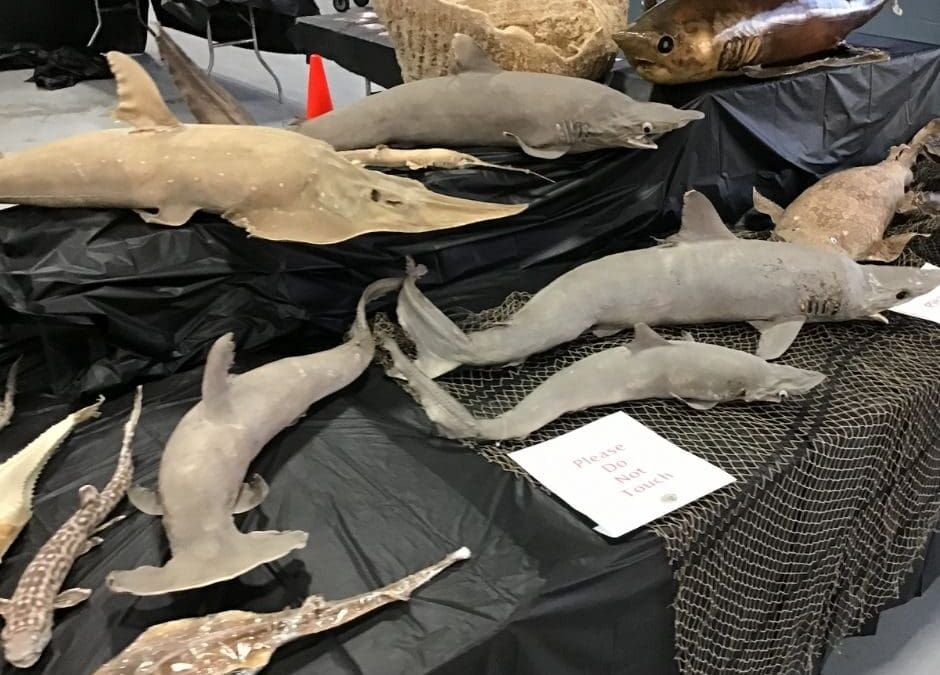
Kids are fascinated by the ocean. It covers about 71 percent of our planet, it is full of strange creatures, and much of it is still unexplored. That makes ocean science one of the easiest ways to pack a library program room. Here are 10 hands-on ocean STEM activities for ages 4 to 12 that work in a library, plus tips for turning them into a full program for your summer reading calendar.
10 hands-on ocean STEM activities for the library
1. Salt water float test
Fill two clear cups with water and stir lots of salt into one. Gently place an egg (or a small potato) in each. In the salty cup it floats higher, because salt water is denser than fresh water. Ask kids: why might some sea creatures only live in the ocean and not in rivers?
2. Blubber glove
Fill a zip-top bag with vegetable shortening, then place a second bag inside it to make a “glove.” Kids dip one bare hand and one blubber-covered hand into ice water and feel how whales and seals stay warm in cold seas.
3. Shark tooth sort
Sharks lose and replace teeth all their lives, which is why fossil shark teeth are so common. Give kids a pile of real fossil shark teeth (or printed pictures) and have them sort by shape: pointed teeth for grabbing fish, serrated teeth for slicing and flat teeth for crushing shells.
4. Oil spill cleanup challenge
Add a spoonful of vegetable oil to a tray of water with a few craft feathers. Teams try to clean it up with cotton balls, spoons, sponges and dish soap, then talk about why spills are so hard to fix.
5. Ocean layers in a jar
Layer honey, dish soap, water with blue food coloring and vegetable oil in a tall jar to model the sunlit, twilight and midnight zones of the ocean. Kids drop in small objects to see which layer they stop in.
6. Build a coral reef
Using clay, pipe cleaners and egg cartons, kids build a reef and add the animals that live there. It is a great way to talk about how coral reefs give homes to a huge variety of sea life.
7. Seashell detective
Set out a mix of real shells. Kids use magnifying glasses to sort them into snail shells (one piece, often spiraled) and clam-type shells (two matching halves), then match them to pictures in ocean field guides from your collection.
8. Molting lobster
Lobsters and crabs grow by climbing out of their old shells. Have a volunteer wear a paper-bag “shell,” then slip out of it, leaving an empty shell behind. Ask: if you found an empty lobster shell, would that mean the lobster was gone?
9. Horseshoe crab facts and tracks
Horseshoe crabs are older than the dinosaurs and have blue blood. Kids can draw the tracks a horseshoe crab leaves in wet sand and compare them with bird and crab tracks.
10. Sea fossil dig
Bury real seashells, fossil shark teeth and fossil coral in a tub of sand. Kids dig, identify what they find with a fossil chart and keep a treasure or two. Nothing gets a room more excited.
Turning activities into a full ocean program
- Add a story. A mystery or a challenge (“Something is wrong with the reef!”) gives every activity a purpose.
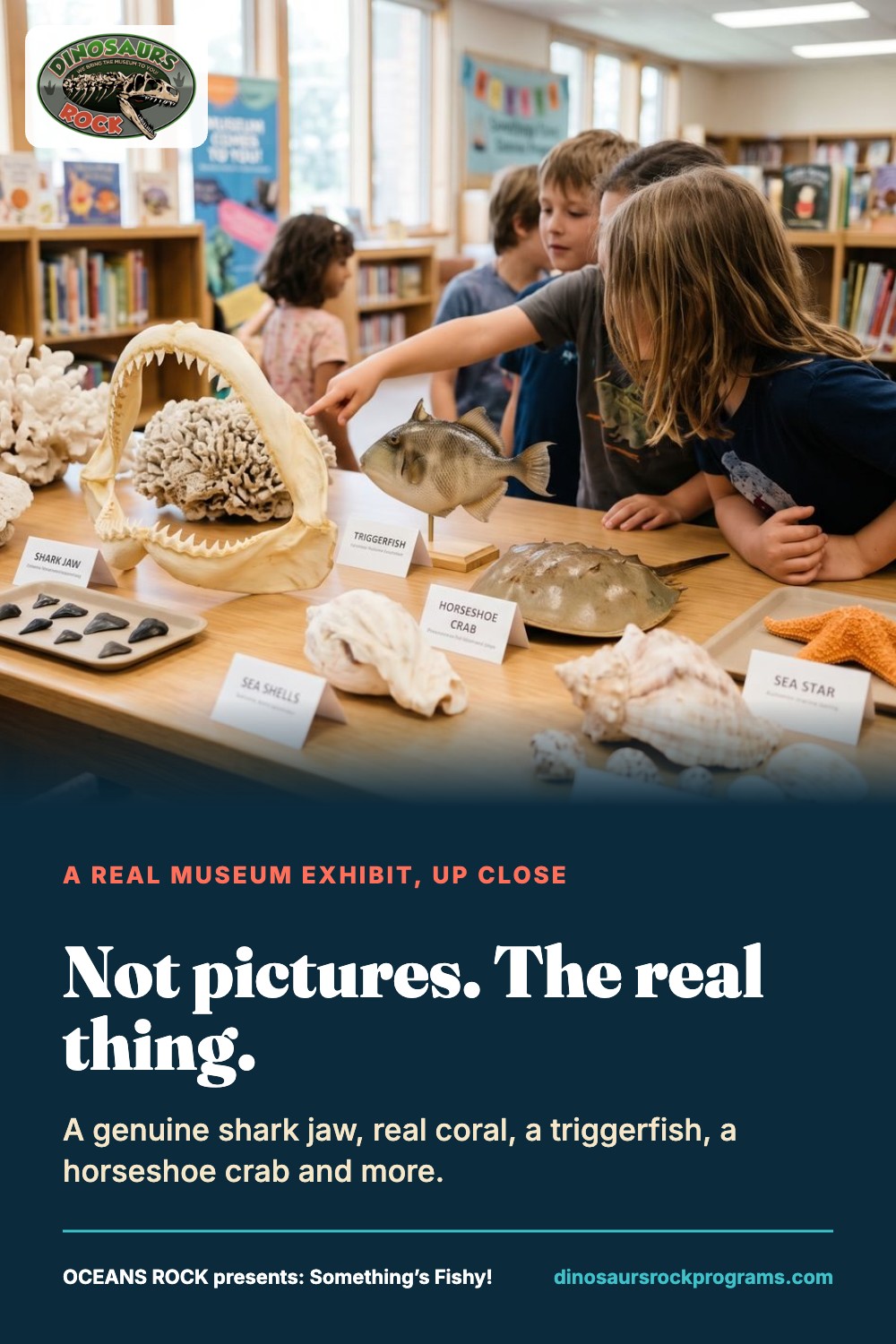
- Use real objects. Kids remember touching a real shark jaw far longer than looking at a picture of one.
- Let kids vote and predict. Asking “What do you think will happen?” before each experiment keeps everyone involved.
- End with a take-home. A shell, a fossil tooth or a fact card keeps the conversation going at home.
- Display ocean books. Put fiction and nonfiction ocean books right by the door.
Want an ocean program you don’t have to build?
Our 2027 summer reading program, OCEANS ROCK presents: Something’s Fishy! Who Wrecked the Reef?, combines real marine science with a mystery kids solve themselves. A genuine shark jaw and real shark teeth, real coral, a triggerfish, a horseshoe crab and many more ocean specimens are displayed in your library. Volunteers help with live experiments, the whole room votes on every clue, and every child digs for two genuine treasures to keep, including fossil coral more than 200 million years old. It runs 45 to 50 minutes for ages 4 to 12 and their families.
We also bring our full OCEANS ROCK program to schools, camps and events. DINOSAURS ROCK serves NJ, NY, CT, PA, MA, RI, MD, VA and CA. Call 917-375-4248 for a quote and to check dates.
Ocean library program FAQ
What age group do ocean STEM activities work for?
The activities above work for ages 4 to 12. Younger kids love the dig, shells and blubber glove, while older kids enjoy the experiments and the “why” behind them.
Are live animals part of the OCEANS ROCK program?
No. Our exhibit uses real preserved specimens, shark jaws, shells and fossils, with no live animals.
How much space does an ocean program need?
For our program, a room with 2 to 4 tables and a screen or blank wall for the presentation.
Save this guide for later
Pin it to your Pinterest board so it’s there when you need it.
Written by DINOSAURS ROCK founder Neil Brown.
