
The 2027 summer reading theme is here, and it is a fun one. The Collaborative Summer Library Program (CSLP) chose mystery, detective and suspense as the 2027 theme, with the slogan Mysteries Await at Your Library. For children’s librarians, that opens the door to clue hunts, code-breaking, science investigations and programs where kids get to be the detective. This guide collects 15 program ideas for ages 4 to 12, from free do-it-yourself activities to a visiting performer that turns your program room into a crime scene.
Why the mystery theme works so well with kids
- Kids love being the expert. A mystery hands them the clues and trusts them to solve it.
- It sneaks in real thinking. Observing, comparing, ruling things out and explaining “how I know” are the same skills scientists use.
- It works for mixed ages. Younger kids hunt for clues while older kids handle the logic, so whole families can play together.
- It connects to books. Every program can end at a display of mystery and detective books for each reading level.
15 Mysteries Await at Your Library program ideas
1. A live science mystery show
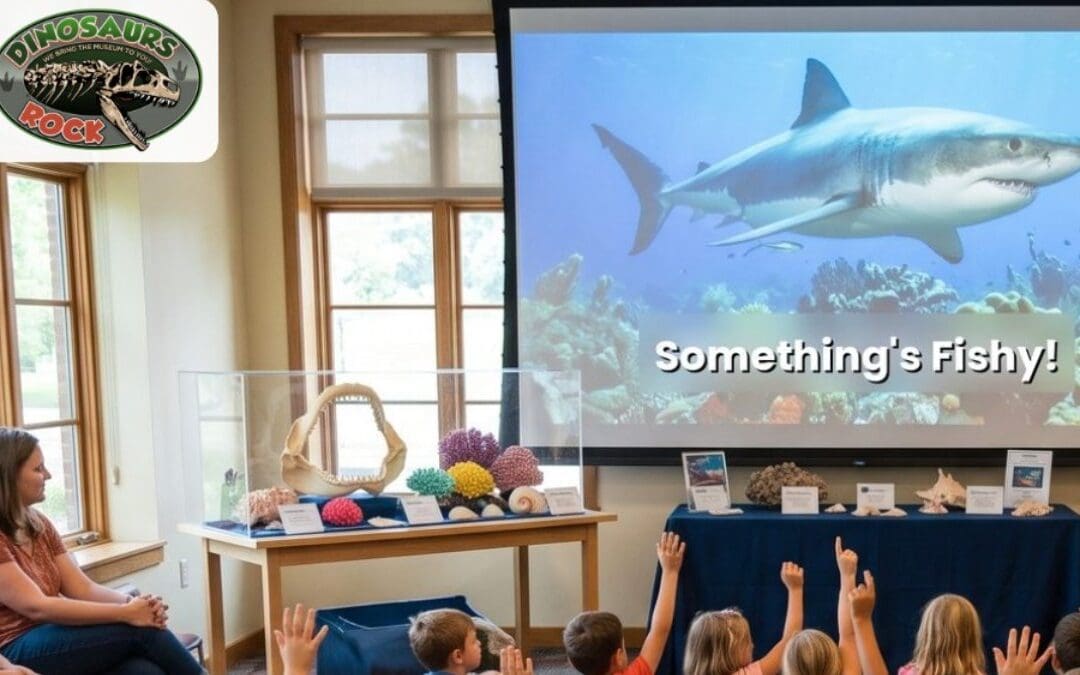
Book a performer whose show is built around a real case the kids solve themselves. Our new 2027 program, OCEANS ROCK presents: Something’s Fishy! Who Wrecked the Reef?, is a 45 to 50 minute ocean mystery for ages 4 to 12 and their families. Something is destroying the coral reef, seven sea creatures are suspects, and genuine specimens of each are displayed right in your library. Kids test four science clues, vote on every one and crack the case, then dig for two real sea treasures to take home.
2. Fingerprint detective lab
Kids press a finger on an ink pad, stamp it on an index card and use magnifying glasses to sort prints into loops, whorls and arches. Then hide a “mystery print” on a cup and let them find the match.
3. Invisible ink messages
Write secret messages with lemon juice and a cotton swab. Once dry, an adult reveals them by holding the paper near a warm light bulb. Older kids can try white crayon on white paper, revealed with a watercolor wash.
4. Code-breakers club
Teach a simple substitution code (each letter shifts a few places down the alphabet) and hide a clue around the library in code. Each solved message leads to the next one.
5. Library clue trail
Create a scavenger hunt where each clue is hidden in a different section: “Look under the book about the biggest animal that ever lived.” It doubles as a sneaky lesson in how the library is organized.
6. Mystery box touch-and-guess
Place everyday objects or natural items (a pinecone, a shell, a feather) in closed boxes with a hand hole. Kids describe what they feel and guess before the reveal. Perfect for preschool storytimes.
7. Animal tracks investigation
Print or stamp animal footprints and challenge kids to identify who walked across the “crime scene.” For a prehistoric twist, add a dinosaur track and talk about how scientists read fossil footprints.
8. Fossil detectives
Every fossil is a clue about a world that disappeared long ago. Set out fossil shark teeth, shells and coral and ask: What was this animal? What did it eat? Where did it live? Our free fossil ID chart helps kids match their finds.
9. “Who took the cookie?” forensic science
Stage a simple case with a missing cookie and three suspects. Kids compare crumbs, footprints and handwriting samples to decide who did it, then explain their evidence.
10. Escape room for families
Lock a box with a combination lock and hide the numbers in puzzles around the room. Groups of four to six work together against the clock.
11. Mystery book tasting
Wrap mystery books in brown paper with only a one-line clue on the cover. Kids pick a book by its clue and unwrap their “case.”
12. Spy gadget craft
Build periscopes from milk cartons and mirrors, or decoder wheels from paper plates. Kids take their gadgets home for more sleuthing.
13. Ocean whodunit at home
Send families home with a simple reef mystery: a picture of a damaged coral reef and a list of sea creatures to research in library books. Which animals could have done it, and which have an alibi?
14. Detective dress-up storytime
Magnifying glasses, trench coats and hats for the little ones, paired with picture-book mysteries and a “find the hidden object” flannel board.
15. Mystery wrap-up party
End the summer with a party where kids present the “cases” they solved through their reading, earn a detective badge and see a final reveal.
Tips for planning your 2027 summer reading season
- Book performers early. Summer dates for popular programs fill months ahead, especially June and July weekday mornings.
- Mix free and featured programs. Do-it-yourself activities fill the calendar, while one or two big visiting programs draw the largest crowds.
- Plan for mixed ages. Choose programs built for ages 4 to 12 so siblings can attend together.
- Give kids something to take home. A take-home item keeps them talking about the library long after the program.
Bring a real mystery to your library
For 27 years, DINOSAURS ROCK has brought hands-on science to libraries, schools and families across NJ, NY, CT, PA, MA, RI, MD, VA and CA. Our 2027 program, Something’s Fishy! Who Wrecked the Reef?, fits the Mysteries Await at Your Library theme perfectly: real museum specimens, a big-screen interactive presentation, a Reef Detective Case File for every child and a Sea Fossil Dig where every child keeps two genuine treasures, including fossil coral more than 200 million years old. Pricing is based on audience size and travel. Call 917-375-4248 for a no-obligation quote and to hold your summer date.
Summer reading 2027 FAQ
What is the 2027 summer reading theme?
The CSLP 2027 theme is mystery, detective and suspense, with the slogan Mysteries Await at Your Library.
When should libraries book summer performers?
As early as possible. Many libraries book their summer performers in the fall and winter before, because the most popular dates go first.
What age group is the Something’s Fishy program for?
It is built for ages 4 to 12 and their families, and runs 45 to 50 minutes.
Save this guide for later
Pin it to your Pinterest board so it’s there when you need it.
Written by DINOSAURS ROCK founder Neil Brown.
