
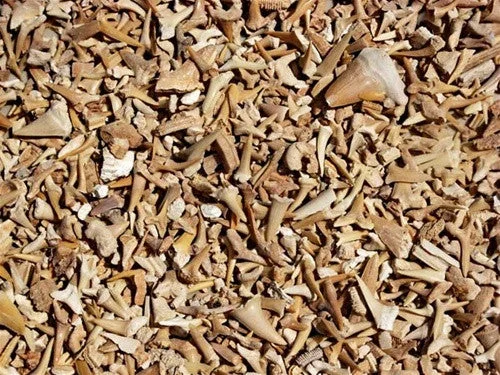
Here is something that surprises a lot of families: some of the best fossil shark tooth hunting on the East Coast is right here in New Jersey. Tens of millions of years ago, much of the state was covered by a warm, shallow sea full of sharks. Today, small brooks in Monmouth County cut through those ancient sea-floor layers and wash their fossils into the gravel, where kids can find them.
Here is where to go, the rules to follow and how to help your kids actually find a tooth.
Why New Jersey has so many fossil shark teeth
Sharks shed and regrow teeth throughout their lives, losing tens of thousands of teeth each. Teeth are hard and fossilize well, which is why shark teeth are the most common vertebrate fossil collectors find. Along the Monmouth County brooks, the teeth come from Late Cretaceous sea-floor sediments, roughly 70 million years old, from the same age as the last dinosaurs. Many of New Jersey’s fossils are preserved in a crumbly, greenish sand called marl.
Best places to find shark teeth in NJ
1. Big Brook (Colts Neck and Marlboro, Monmouth County)
Big Brook is the most famous fossil spot in the state. It is known for shark teeth, including teeth from goblin sharks, plus mosasaur teeth, belemnites and ancient oysters. There are two public areas:
- Big Brook Preserve (Colts Neck Township): parking on Hillsdale Road. Township rules are posted at the parking area.
- Big Brook Park (Monmouth County Park System, Marlboro): the county welcomes fossil hunting in the brook under its own supplemental fossil collecting rules.
Access points change from time to time, so check the county and township websites before you go.
2. Ramanessin Brook (Holmdel)
Another Cretaceous brook in the same fossil-rich layers. It is quieter than Big Brook and popular with experienced collectors. Stay in the stream and respect private property.
3. Other Monmouth County brooks
Poricy Brook in Middletown, Shark River, Willow Brook and Hop Brook also cut through fossil-bearing layers. Collecting rules differ by park and owner, so always check before you search.
4. Edelman Fossil Park & Museum (Mantua Township, Gloucester County)
Rowan University’s fossil park sits in a former marl quarry with a 66-million-year-old bone bed. It has held hugely popular public Community Dig Days, where families sift for shark teeth and other fossils, and tickets have sold out in minutes. The park’s museum opened in 2025. Check the park’s website for current dig programs.
The rules: collect responsibly
Big Brook’s fossils are a rare and fragile resource, and they belong to the public. Colts Neck Township’s Big Brook Preserve rules include:
- Groups of 15 or more need a permit from the township’s Department of Recreation and Parks.
- Collect only within the stream’s waterline. Do not dig into the stream banks.
- Small hand tools only. Visitors report a limit of a shovel with a blade up to 6 inches.
- Take only a few fossils per day. The posted limit has been five per person.
Rules can change, so read the signs at the parking area and the current rules online before every trip. The Monmouth County Park System’s Big Brook Park has its own rules too.
What to bring
- A sifting screen (a kitchen colander or a small hand sieve works for kids)
- A small trowel or scoop, within the posted size limits
- Waterproof boots or old sneakers, since you will be standing in the brook
- A small container or zip bag for your finds
- Bug spray and long pants for ticks, and an eye out for poison ivy on the banks
- A towel, snacks and water
How to actually find a shark tooth
- Find a gravel bar. Look for spots where the water slows and coarse gravel collects. Fossils are heavy and settle there.
- Scoop and sift. Scoop gravel from the stream bed into your screen and shake it gently in the water.
- Look for the shape and shine. Shark teeth are small triangles, often shiny and dark gray, brown or black, with a smooth enamel surface that catches the light.
- Be patient. Some scoops hold nothing; others hold three teeth. Kids who keep going usually find something.
- Go after a rain (but never in high or fast water). Fresh gravel moves after storms.
What else you might find
- Belemnites: bullet-shaped fossils from squid-like animals
- Ancient oysters: large, curled fossil shells, often the easiest finds
- Mosasaur teeth: rare and exciting finds from giant marine reptiles
- Bone fragments: once in a while, even dinosaur bone. A hadrosaur bone was found in the Big Brook area in 2008.
Learn more about New Jersey’s prehistoric past in our guide to dinosaurs that lived in New Jersey.
Tips for fossil hunting with kids
- Go in late spring through early fall, when the water is comfortable.
- Give each child their own screen and container.
- Show them a real shark tooth first so they know what to look for.
- Celebrate every find, even oyster shells.
- Keep young children close and stay out of deep or fast water.
Can’t make it to the brook? We bring the fossils to you
At every DINOSAURS ROCK party and school program, kids dig for real fossils and keep what they find, often including genuine fossil shark teeth. Our Oceans & Sharks birthday party and OCEANS ROCK® school assembly are built around sharks, and we serve families throughout Monmouth & Ocean counties.
Shark teeth in NJ FAQ
Can you find megalodon teeth in New Jersey?
Megalodon teeth are very rare in New Jersey. Most teeth found in the Monmouth County brooks are smaller teeth from Cretaceous sharks.
Do I need a permit to hunt for fossils at Big Brook?
Not for small family groups. At Big Brook Preserve, groups of 15 or more need a permit. Always check the current rules first.
Can I keep the shark teeth I find?
Yes, within the posted daily limits and only from the stream bed. Never dig into the banks.
Save this guide for later
Pin it to your Pinterest board so it’s there when you need it.
Written by DINOSAURS ROCK founder Neil Brown.
