
Last Updated: October 27, 2026
Quick Summary
Plan hands-on science activities for elementary students by choosing one clear learning goal per activity, then picking a simple experiment that uses common household materials and a testable question. Write the objective before you gather supplies, match the task to the grade band, and set safety rules before supplies come out.
- Pick one learning bucket per activity, because two goals in one lesson usually means kids learn neither.
- A baking soda volcano demonstrates a chemical change, since the reaction produces carbon dioxide gas.
- A homemade lava lamp demonstrates a physical change, because the colored water blobs form no new substance.
- K-1 activities run 10-15 minutes, 2-3 activities run 15-25 minutes, and 4-5 activities run 25-40 minutes.
- Set goggles, no tasting, and adult-pours rules before supplies come out.
Table of Contents
- Start With the Goal: What Hands-On Science Should Teach
- Elementary Science Experiments That Need Only Common Household Materials
- Science Activities by Grade Level: Matching the Task to the Learner
- No-Prep Science Experiments for Busy Classrooms and Short Periods
- Safety, Supervision, and Cleanup Estimates for Every Activity
- Hands-On Science Lesson Plans: Turning an Activity Into a Lesson
- Adaptations, Extensions, and Assessment That Fit Every Student
- Book a Museum-Grade Fossil and Geology Program for Your Group
- Frequently Asked Questions
Start With the Goal: What Hands-On Science Should Teach
Hands-on science activities for elementary students work best with a clear learning goal, not a cute craft: one idea, something to touch, and a question kids can answer themselves.
Before you pick a volcano or a lava lamp, decide what the lesson is for. Most elementary science falls into a few buckets:
- Scientific method: ask, predict, test, observe, conclude
- Chemical changes: new substances form, like gas from baking soda and vinegar
- Physical changes: the substance stays the same, like melting or mixing colors
- Earth science: rocks, minerals, soil, and the rock cycle
- Weather and atmosphere: clouds, air pressure, and temperature
- Motion, energy, and magnets: pushes, pulls, and magnetic forces
Pick one bucket per activity. Two goals in one lesson usually means kids learn neither.
The Scientific Method as a Student Prompt Sheet
- Question: What do I want to find out?
- Prediction: What do I think will happen, and why?
- Test: What will I change, and what will I keep the same?
- Observation: What did I see, hear, smell, or feel?
- Conclusion: Was my prediction right? What surprised me?
Elementary Science Experiments That Need Only Common Household Materials
| Activity | Supplies | Setup time | Cleanup time | Mess level | Safety note |
|---|---|---|---|---|---|
| Baking soda volcano | Plastic bottle, baking soda, vinegar, dish soap, food coloring, tray | 5 minutes | 10 minutes | Medium | Goggles; adult pours vinegar; run on a tray |
| Lava lamp | Plastic bottle, vegetable oil, water, food coloring, antacid tablet | 5 minutes | 5 minutes | Low | Do not seal the bottle; adult handles the tablet |
| Cloud in a jar | Glass jar, hot water, hairspray, ice, bag | 5 minutes | 5 minutes | Low | Adult pours hot water; spray hairspray away from faces |
| Milk and vinegar | Milk, vinegar, bowl, spoon | 3 minutes | 5 minutes | Medium | No tasting; wash hands after |
| Rusty steel wool | Steel wool, dish, water | 2 minutes | 3 minutes | Low | Gloves for students with sensitive skin |
| Seed sprouting in a bag | Bean, damp paper towel, zip bag | 3 minutes | 2 minutes | Low | Wash hands after handling seeds |
Baking Soda Volcanoes and Other Chemical Changes
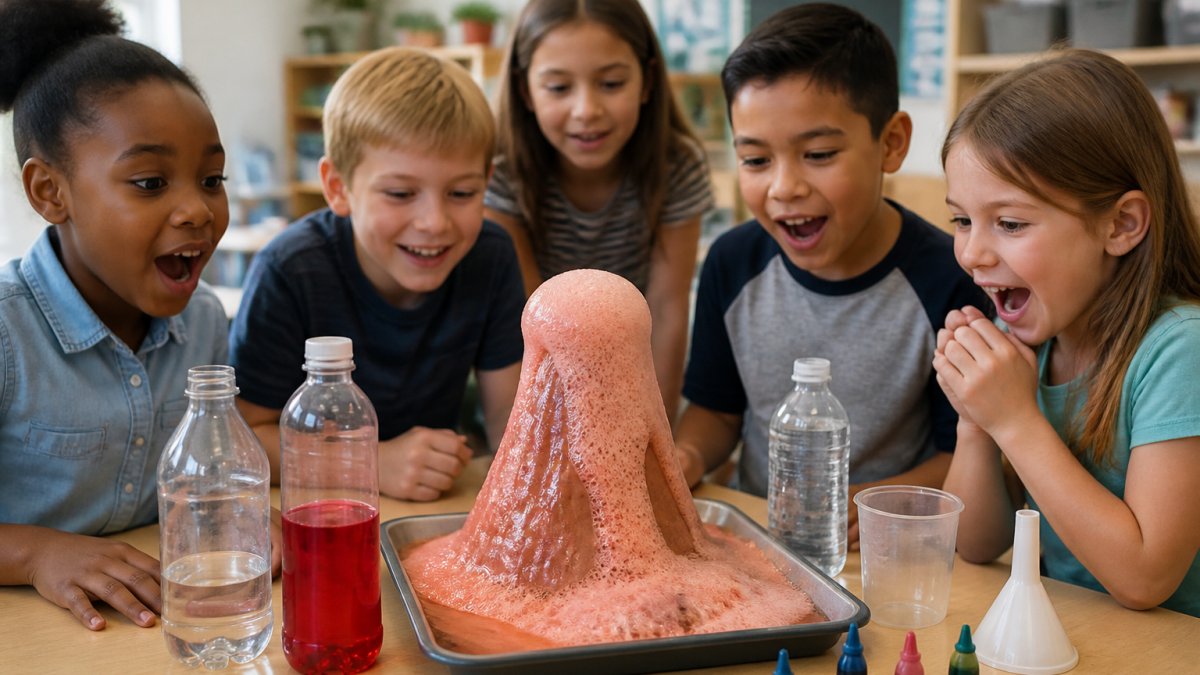
A baking soda volcano is a chemical change demo: the baking soda and vinegar react and produce carbon dioxide gas. The bubbles are new gas, not just shaken-up liquid.
Build it in a plastic bottle on a tray, add warm water and a squirt of dish soap, then spoon in baking soda and pour in vinegar. Add food coloring for drama.
Other chemical changes worth running:
- Milk and vinegar: curds form, which shows a new solid appearing
- Rusty steel wool: leave it in a dish of water for a few days and watch it change
- Lemon juice on apple slices: browning slows, which links to real food science
Ask the key question every time: did something new form? If yes, it is a chemical change. Have students describe the gas, color change, and temperature change in their own words before naming the reaction.
Lava Lamps, Cloud in a Jar, and Other Physical Changes
A homemade lava lamp is a physical change demo: oil and water do not mix, and the colored water blobs rise and fall without becoming a new substance. Fill a plastic bottle two-thirds with oil, add water and food coloring, then drop in an antacid tablet. Leave the cap off so gas can escape, and set the bottle on a tray.
A cloud in a jar follows the same supply list. Add hot water to a jar, spray hairspray above the water, and set a bag of ice on top. The vapor condenses into a cloud, a physical change and a clean tie-in to weather and the atmosphere. Have students predict how long the cloud will last.
More physical changes to try:
- Melting and freezing: ice, butter, or chocolate
- Dissolving: salt and sugar in warm versus cold water
- Mixing colors: food coloring in water
Keep water away from outlets and devices, and have an adult pour any hot water. Goggles are recommended for anything that fizzes, sprays, or splashes, and no student should taste any experiment, even the edible ones.
Turning a Household Demo Into a Structured Investigation
| Activity | Testable question | Extension: change one variable |
|---|---|---|
| Baking soda volcano | Does more baking soda make a bigger reaction? | Increase baking soda by one spoon and compare |
| Lava lamp | Does water temperature change how fast the blobs move? | Use cold versus warm water |
| Cloud in a jar | Does the amount of ice change how thick the cloud looks? | Add more ice and compare |
| Milk and vinegar | Does warm milk curdle faster than cold milk? | Compare warm and cold milk |
| Seed sprouting | Does light change how fast the seed sprouts? | Place one bag in light and one in a dark closet |
Science Activities by Grade Level: Matching the Task to the Learner
| Grade band | Learning objective | Suggested activity | Student output | Adult role | Time per activity |
|---|---|---|---|---|---|
| K-1 | Observe that materials can change and describe the change with words or pictures | Color mixing, sink or float, sorting rocks by property | Drawing plus one spoken sentence | Full setup, hands-on help, scribe for students still learning to write | 10-15 minutes |
| 2-3 | Predict an outcome and compare the prediction to what happened | Baking soda volcano, lava lamp, seed sprouting in a bag | Two written sentences: prediction and result | Setup help, guided questions, safety check | 15-25 minutes |
| 4-5 | Identify a variable, keep other conditions the same, and explain the result | Cloud in a jar with temperature variations, crystal growing, simple machines | Short paragraph with a claim and evidence | Safety check only, plus review of the written conclusion | 25-40 minutes |
Tying Activities to Learning Goals, Not Just Topics
Write the objective before you pick the supplies. Then choose the recording method that fits the grade band:
- K-1: draw the before and after, then tell a partner what changed
- 2-3: write a prediction sentence and a result sentence on the prompt sheet
- 4-5: write a claim, one piece of evidence, and a short explanation of why it happened
Connecting to Standards Without Overcomplicating It
- Core idea examples: matter and its interactions; Earth’s systems; weather and climate; forces and motion; inheritance and variation of traits
- Practice examples: asking questions, planning and carrying out investigations, analyzing data, constructing explanations
- Crosscutting concept examples: cause and effect, patterns, systems and system models, energy and matter
Choosing One Activity Across Multiple Grades
- Sink or float: younger students sort objects; older students predict, test, and explain density in their own words
- Seed sprouting in a bag: younger students observe change over days; older students change one variable, like light or water amount, and compare results
- Paper helicopter drop: younger students watch the spin; older students change wing length and measure fall time
No-Prep Science Experiments for Busy Classrooms and Short Periods
- Sink or float: a tub of water and classroom objects
- Paper helicopter drop: one sheet of paper, one paperclip
- Magnet hunt: a magnet and a pile of small items
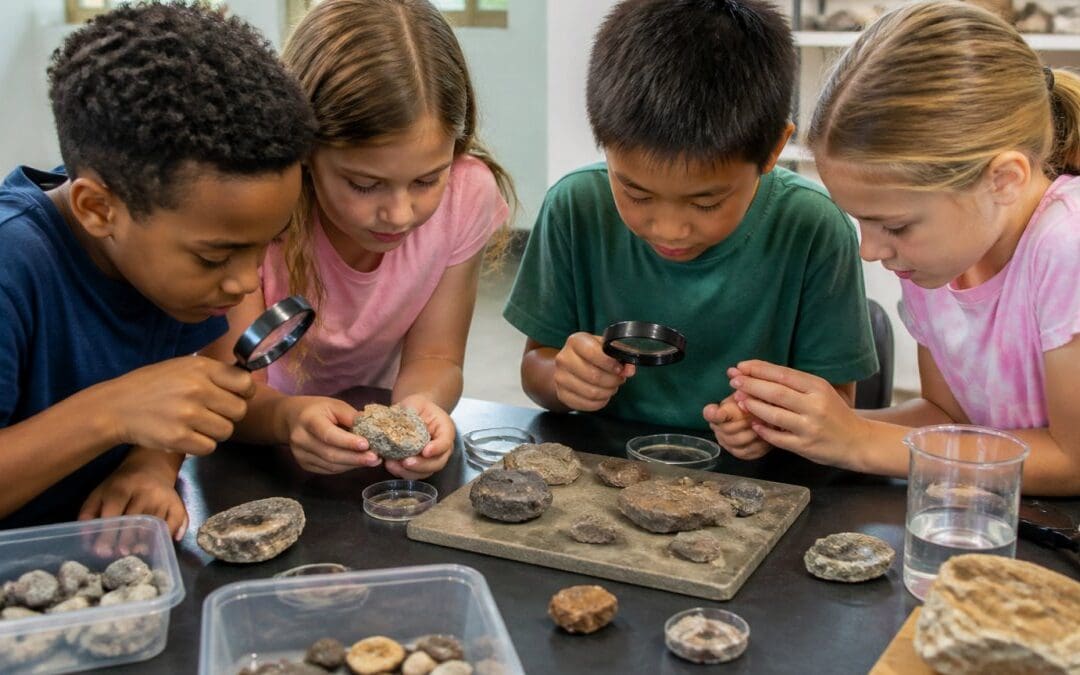
- Rock sorting: a handful of mixed rocks and a magnifying glass
- Seed sprouting in a bag: a bean, a damp paper towel, a zip bag
Safety, Supervision, and Cleanup Estimates for Every Activity
Set these rules before supplies come out:
- Goggles for anything that fizzes, sprays, or splashes
- No tasting anything, even edible experiments
- Adult pours the vinegar and handles anything sharp
- Keep water away from outlets and devices
- Wash hands after handling soil, rocks, or food
| Activity | Setup time | Cleanup time | Mess level |
|---|---|---|---|
| Sink or float | 2 minutes | 3 minutes | Low |
| Volcano | 5 minutes | 10 minutes | Medium |
| Lava lamp | 5 minutes | 5 minutes | Low |
| Cloud in a jar | 5 minutes | 5 minutes | Low |
| Seed sprouting | 3 minutes | 2 minutes | Low |
Hands-On Science Lesson Plans: Turning an Activity Into a Lesson
Use this five-part frame for any activity:
- Hook: one question to open, like “what will happen if…?”
- Predict: every student writes or draws a guess
- Test: run the experiment with clear steps
- Observe: students record what actually happened
- Connect: tie the result back to the science idea
Adaptations, Extensions, and Assessment That Fit Every Student
Adaptations to plan for:
- Pre-measure supplies for students who struggle with pouring
- Offer gloves for kids who dislike messy textures
- Provide picture prompts for students still learning to write
- Allow partner work so no student is left out of the messy step
- Give extra time for observation and recording
Book a Museum-Grade Fossil and Geology Program for Your Group
Dinosaurs Rock brings genuine museum-grade dinosaur fossils, gemstones, and interactive exhibits straight to your school, library, homeschool group, or party. Every child digs up and keeps genuine specimens. No costumes, no puppets, just real science in kids’ hands. Our programs have reached over 10 million participants in 27 years, and one school called the program “one of the BEST PROGRAMS we’ve ever had.”
Call us at (917) 375-4248.
Frequently Asked Questions
What are some hands-on science activities for elementary students?
Start with activities such as baking soda and vinegar volcanoes, a cloud in a jar, seed sprouting, and magnet sorting. Pair an activity with an observation prompt.
How do you adapt science activities by grade level?
Activities can be adapted by changing the task and the way students record their observations. Younger students can draw what they see, while older students can write a hypothesis and compare results across trials.
What are safe science experiments for elementary students?
Plan supervision and safety precautions for the activity. The article recommends goggles for activities that fizz or spray, no tasting, and keeping water away from outlets and devices.
How long should a hands-on science activity take?
Activity length depends on the activity and the time available. Consider allowing time for setup, cleanup, observation, and discussion.
Planning hands-on science for a whole grade level is a lot of work, and doing it well takes more than a supply list. If you want the fossils, minerals, and real specimens handled for you, Dinosaurs Rock can bring a museum-grade program to your group. Get started with Dinosaurs Rock and give your students a science day they will remember.

