
A great school assembly is one of the best things a PTA can give students. The right program can spark a lifelong interest, tie into what kids are learning in class and get the whole school buzzing for weeks. The wrong one is 45 minutes of fidgeting. This guide covers 12 assembly ideas elementary students love, plus a practical checklist for choosing, funding and scheduling the right one.
What makes a great elementary assembly?
- Kids participate. Volunteers, call-and-response, hands-on moments. Elementary students learn by doing.
- It connects to the curriculum. Principals and teachers support programs that reinforce what students are learning.
- It is built for the age group. What works for kindergarten won’t work for fifth grade, so look for presenters who tailor shows by grade.
- Something real. Real artifacts, real instruments, real animals, real experts. Authenticity is what kids remember.
- It lasts beyond the day. A follow-up activity, study guide or take-home item keeps the learning going.
12 PTA assembly ideas for elementary schools
1. Hands-on dinosaur and fossil assembly
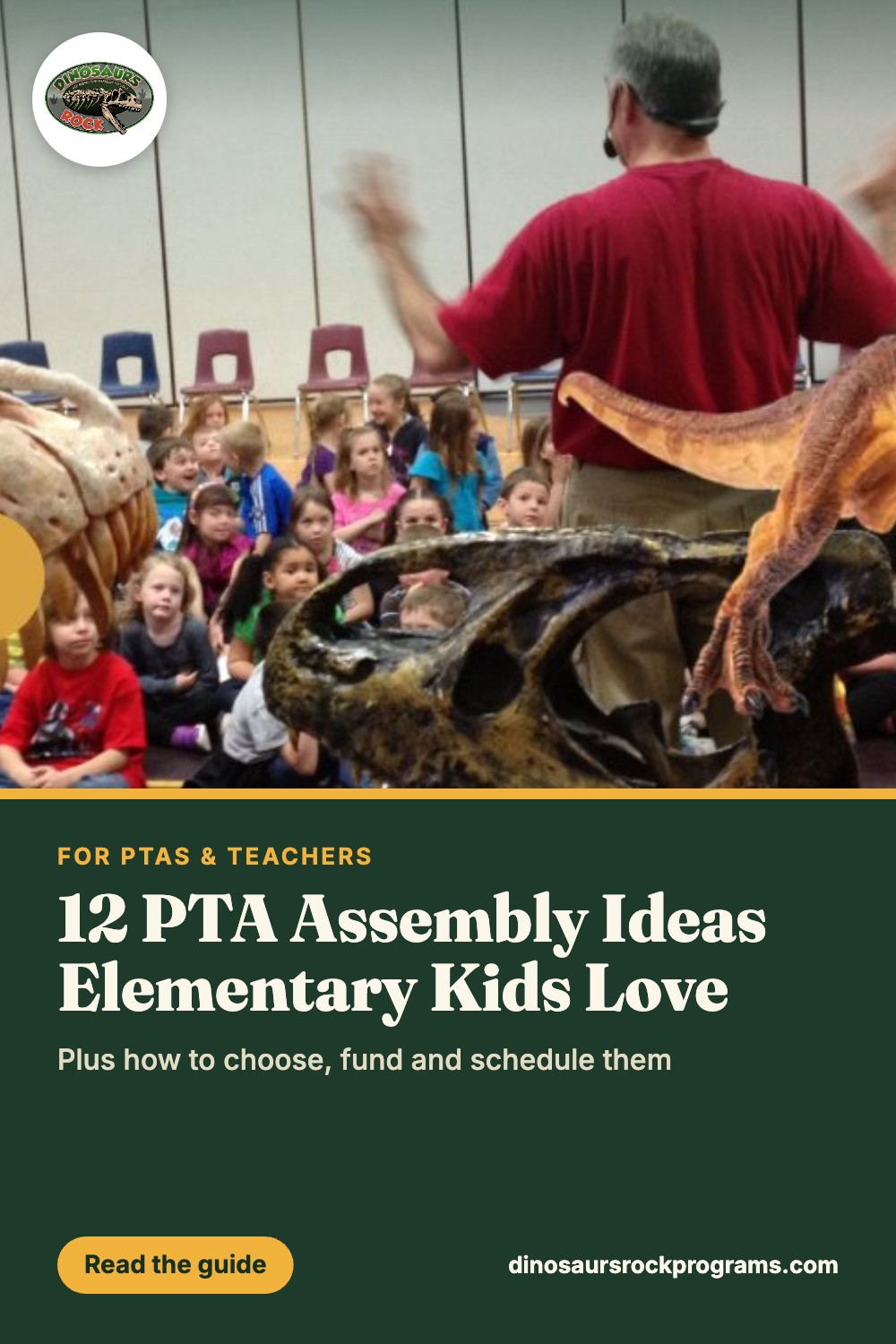
Dinosaurs are a near-universal favorite from PreK through middle school. Look for a program that brings genuine fossils, not just pictures. The DINOSAURS ROCK® assembly turns your gym into a natural history museum, and every student keeps a real fossil.
2. Ocean and shark science
Sharks, ocean habitats and food chains are a hit with every grade and tie into life science standards. See the OCEANS ROCK® assembly.
3. Rocks, minerals and gem mining
The rock cycle comes alive when students see geodes cracked open and real gems pulled from a mining sluice. See the GEMS ROCK® assembly, and read how geodes form.
4. Insects and life cycles
Perfect for the younger grades studying life cycles and habitats, especially with real preserved specimens. See the INSECTS ROCK assembly for PreK–5.
5. Chemistry and “mad science” shows
Safe, colorful demonstrations of reactions, states of matter and air pressure. Great for a STEM kickoff.
6. Live animal presentations
Reptiles, birds of prey or rescued animals with a trained handler. Ask about allergies and the presenter’s permits and insurance.
7. Author and illustrator visits
Meeting a real author makes reading personal. Pair the visit with a book order so students can get signed copies.
8. Music and cultural performances
Drumming, dance, folk music or performers from around the world. Wonderful for heritage months and building community.
9. Character education and anti-bullying
Programs on kindness, empathy and conflict resolution work best when they are interactive and backed up by classroom follow-up.
10. Space and astronomy
Portable planetariums or rocket demonstrations tie directly into Earth and space science.
11. History come to life
Costumed historical interpreters bring social studies units to life, from colonial times to famous inventors.
12. Family Science Night
Not every program has to happen during the school day. An evening event with hands-on stations brings families into the building and can double as a PTA fundraiser. Many assembly presenters, including DINOSAURS ROCK, offer family-night versions of their programs.
How to choose the right assembly
- Start with the teachers. Ask what units are coming up and what would support them.
- Ask for grade-level tailoring. Can the presenter do separate shows for K–2 and 3–5?
- Check references. Ask for schools nearby that booked the program, and call one.
- Ask what students touch and keep. Hands-on elements and take-homes are what students remember.
- Confirm insurance and safety. Reputable presenters carry liability insurance and are used to working within school safety policies.
- Look for teacher resources. A study guide or follow-up activity multiplies the value.
Budgeting and funding your assembly
- Book multiple shows in one day. Back-to-back grade-level shows are usually more cost-effective per student than separate visits.
- Use PTA fundraising. Many PTAs set aside a yearly enrichment budget from fundraisers like book fairs and fun runs.
- Look for grants. Local education foundations, community organizations and businesses often fund enrichment programs.
- Partner with neighboring schools. Coordinating dates with another school in your district can sometimes reduce travel costs.
- Get a written quote that includes travel and any extra-show pricing.
Scheduling tips
- Book two to three months ahead, earlier for popular spring dates.
- Avoid testing weeks and the last week before a holiday break.
- Morning shows usually work best for younger students.
- Reserve the space (gym, cafeteria or auditorium) and confirm setup time and power needs with the presenter.
- Plan the flow: which grades go when, where classes sit and how long transitions take.
Assembly day checklist
- Confirm the presenter’s arrival time and parking or loading access
- Have a PTA volunteer meet the presenter at the door
- Share the schedule with teachers and the front office
- Set up seating with a clear view for the youngest students up front
- Take photos (following your school’s photo policy) for the newsletter and social media
- Send the teacher study guide afterward
Bring a museum to your school
For 27 years, DINOSAURS ROCK has brought hands-on science assemblies to schools across NJ, NY, CT, PA, MA, RI, MD, VA and CA. Every 45 to 50 minute show is tailored by grade for PreK–8, built around genuine museum specimens, and every student goes home with a real specimen. See all four programs on our school assemblies page, or find assemblies in your area.
PTA assembly FAQ
How long should an elementary assembly be?
About 45 to 50 minutes works well for most elementary grades. Shorter shows are better for PreK and kindergarten.
How many students can attend one show?
It depends on the program and the space. Many schools split into K–2 and 3–5 shows so content fits each age group.
How do we get a quote?
For DINOSAURS ROCK, call or text 917-375-4248 or email dinosaursrock2@gmail.com with your school, number of students and preferred dates.
Save this guide for later
Pin it to your Pinterest board so it’s there when you need it.
Written by DINOSAURS ROCK founder Neil Brown.
