
Last Updated: November 17, 2026
Quick Summary
Hands-on paleontology programs for schools are worth it when students handle genuine fossils rather than plastic casts, because that physical encounter makes earth science curriculum stick. Book by matching format to group size, age, and curriculum goals, then confirm specimens, standards alignment, and insurance in writing before paying a deposit.
- Real fossils should pass three quick checks: weight, texture, and variation.
- Ask providers for their standards mapping document in writing before you book.
- Free sessions tend to be shorter, use fewer specimens, and rarely send anything home.
- Confirm unloading access, tables, power, noise tolerance, and accessibility with your provider.
- Ask whether the provider carries liability insurance and can supply a certificate.
Table of Contents
- What Hands-On Paleontology Programs for Schools Actually Deliver
- Real Fossils for Kids Activities: What Makes a Specimen Genuine
- Matching Programs to Grade Levels and K-12 Science Standards
- Free Hands-On Paleontology Programs for Schools: What Is Realistically Available
- Hands-On Paleontology Programs for Schools Online: Virtual Options That Work
- Paleontology Summer Programs for High School Students
- Logistics, Space, and Accessibility: Planning the Visit
- Safety and Liability Protocols for Fossil Handling
- Booking a Paleontology Program for Your School or Group
- Frequently Asked Questions
What Hands-On Paleontology Programs for Schools Actually Deliver
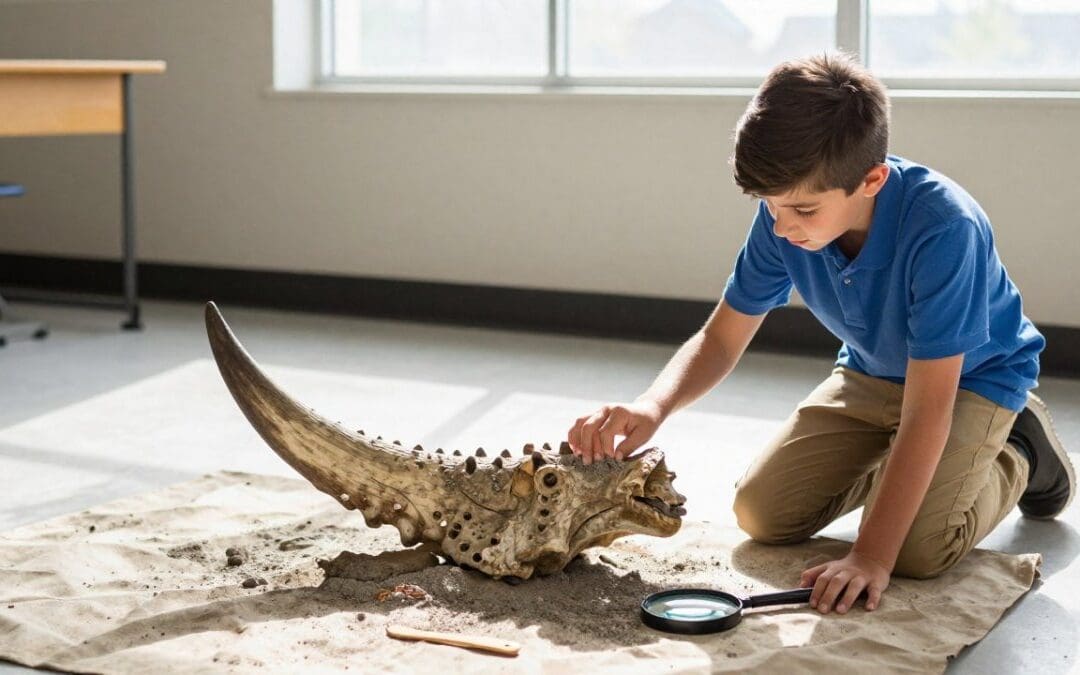
Hands-on paleontology programs for schools bring genuine fossil specimens into the classroom and let students handle, examine, and sometimes keep real material instead of looking at pictures of it. The difference between a real specimen and a plastic cast is obvious within seconds of a child picking one up.
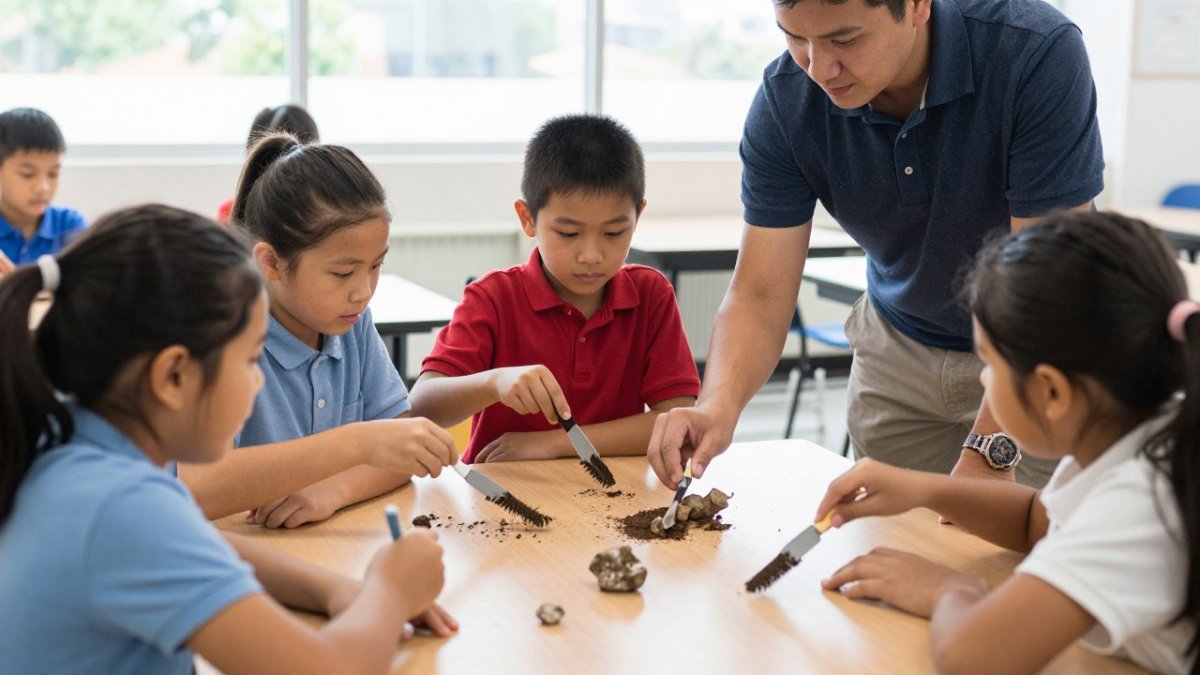
What you are buying is not entertainment with a science theme. It is experiential learning built around scientific inquiry: students compare textures, weigh fragments in their hands, ask why one rock splits cleanly and another crumbles, and walk away with a fossil they dug out themselves. That physical encounter is what makes earth science curriculum stick.
Anything short of that is a dinosaur-themed assembly, not paleontology education.
Real Fossils for Kids Activities: What Makes a Specimen Genuine
Genuine means the specimen came out of the ground, not out of a mold. Real fossils for kids activities should pass three quick checks: weight, texture, and variation.
A common mistake is assuming “museum-grade” means expensive display pieces. In practice it means authentic, well-preserved, and safe to handle. Ask any provider directly whether the take-home specimens are real, and ask for a sample before you book.
Matching Programs to Grade Levels and K-12 Science Standards
Ask providers which standards their content maps to and request that mapping in writing before you commit.
The useful question is which specific Next Generation Science Standards (NGSS) performance expectations a session supports, and at which grade band.
Ask for the mapping document before you book, and check whether the take-home specimen is tied to a written observation or data activity.
If your district has moved away from NGSS, ask the provider to map to your state’s adopted earth science standards instead. The three-dimension structure is common enough that a well-built program can be re-mapped with a short conversation, but get the revised mapping in writing so your curriculum coordinator has documentation on file.
Free Hands-On Paleontology Programs for Schools: What Is Realistically Available
The honest trade-off is depth. Free sessions tend to be shorter, use fewer specimens, and rarely send anything home. If your budget is genuinely zero, start with institutional outreach and pair it with classroom fossil casting and stratigraphy exercises you run yourself.
Hands-On Paleontology Programs for Schools Online: Virtual Options That Work
Where virtual genuinely wins: reaching rural schools, connecting multiple classrooms at once, and bringing in specialists who would never travel to you. Where it loses: the tactile discovery that makes paleontology memorable. Use virtual for breadth, in-person for the moment a child pulls a real fossil out of a dig tray.
Paleontology Summer Programs for High School Students
What to look for:
- Actual field camp time at a dig site, not just lab tours
- Instruction in paleontological field methods and field site safety
- Exposure to micro-fossil analysis, fossil preparation, and fossil casting
- A finished product: a curated specimen, a report, or a presentation
Logistics, Space, and Accessibility: Planning the Visit
The real constraints are table space for specimen stations, a clear presentation area, and enough room for students to move between them.
Plan the practical details early:
- Confirm unloading access and setup time with your provider
- Check whether tables and power are supplied or need to be arranged
- Ask about noise tolerance if you are sharing a building
- Verify accessibility for students using wheelchairs or with sensory sensitivities
Accessibility deserves a direct conversation. Ask how the presenter handles students who cannot easily reach dig tables, whether amplification is available for hearing-impaired students, and how the session accommodates sensory-sensitive children. A good provider has answers ready.
Before the visit, confirm these practical details with your provider.
| Item | What to confirm |
|---|---|
| Unloading access | Confirm access and setup time with provider |
| Tables and power | Check whether supplied or arranged by school |
| Noise tolerance | Ask if sharing a building |
| Accessibility | Verify access for wheelchair users and sensory sensitivities |
| Amplification | Ask whether available for hearing-impaired students |
| Dig tables | Ask how presenter handles students who cannot reach them |
Safety and Liability Protocols for Fossil Handling
Safety in fossil handling is straightforward but must be explicit. Real specimens can have sharp edges, fossil prep work generates dust, and digging stations create trip hazards.
Ask these questions before booking:
- Are specimens cleaned and inspected for sharp edges before handling?
- What are the choking-hazard policies for early elementary and preschool groups?
- Does the provider carry liability insurance, and can they supply a certificate?
- How are handwashing and dust control handled during preparation activities?
- What is the supervision ratio expected from school staff?
Ask the provider whether it carries liability insurance and can supply a certificate during booking.
Confirm in writing which staff the provider supplies and which the school supplies.
Ask how the presenter accommodates students using wheelchairs and students with sensory sensitivities, and confirm the school’s obligations under the Americans with Disabilities Act (ADA) are met for any off-campus site.
For off-campus field experiences, ask whether the provider carries a written field safety plan covering weather, terrain, first aid, and emergency communication.
Booking a Paleontology Program for Your School or Group
Book by matching the program format to your group size, age range, and curriculum goals, then confirm specimens, standards alignment, and insurance in writing before you pay a deposit. That single checklist prevents most booking regrets.
Our recommendation: prioritize authenticity over spectacle. Every child digs up and keeps a genuine specimen, with no costumes or puppets. Over 10 million participants have been through our programs over the past 27 years.
Pricing depends on group size, date, and location, so call us at (917) 375-4248 for a current quote. If you are organizing a small homeschool group, our guide on how to run science programs for small homeschool groups covers the setup details.
Your students can hold a fossil that is millions of years old this semester, not next year. Dinosaurs Rock brings genuine museum-grade specimens, life-size roaring dinosaur exhibits, and a dig where every child keeps what they find, with 27 years of experience behind every visit. Call us at (917) 375-4248 to check dates and get a quote for your school, camp, library, or homeschool group.
Frequently Asked Questions
What hands-on paleontology programs are available for schools?
Options fall into four groups: traveling presenters who bring museum-grade specimens to your site, museum outreach visits, residential field camps, and online virtual sessions. Traveling programs like Dinosaurs Rock bring genuine fossils, gemstones, and excavation activities directly to schools, libraries, and homeschool groups, with every child digging up and keeping a real specimen.
How can teachers bring real fossils into the classroom?
The most direct route is booking a traveling program that supplies authentic specimens and a presenter. If budget is tight, check museum loan kits, university geology department outreach, and local rock and mineral clubs. When handling real fossils, set clear rules: no tapping specimens on tables, no water, and wash hands afterward. Store them in padded trays between sessions. Real fossils for kids activities work best when children can touch, compare, and ask questions rather than just look.
Are free hands-on paleontology programs for schools actually available?
Some free options exist but are limited. Public libraries often host no-cost earth science events, museums run grant-funded outreach in some districts, and university paleontology departments sometimes offer student-led classroom visits. Availability varies widely and slots fill early. If your priority is every child taking home a genuine specimen, a paid traveling program is the more reliable route.
How long does a school paleontology workshop usually last?
Ask the provider how many students one session comfortably handles, and confirm setup and breakdown time so you can plan lunch and recess around it.
What should teachers look for when choosing a paleontology program?
Check four things: whether specimens are genuine or replicas, how many students each session serves, whether activities align with your grade-level science standards, and what safety and cleanup protocols the provider follows. Ask for references from schools in the past year or two. Also confirm whether children keep what they dig up, since take-home specimens extend the learning into family conversations. Dinosaurs Rock has run these programs for 27 years, with over 10 million participants.
Can students learn paleontology online?
Yes, but with limits. Virtual sessions work well for introducing geologic time, stratigraphy, and fossil identification using high-resolution images and live Q&A. What they cannot replicate is the tactile experience of excavating and handling a real specimen. The strongest approach pairs an online lesson unit with one in-person dig event, so students build background knowledge first and then apply it with their hands.

