
Last Updated: November 19, 2026
Quick Summary
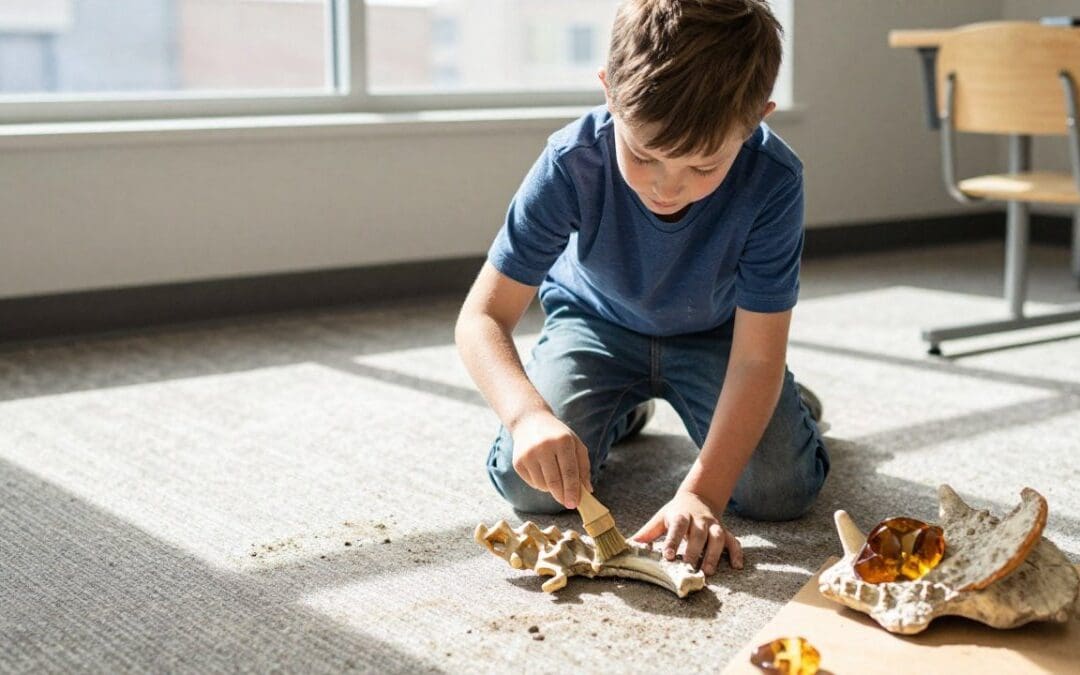
Choose hands-on science because children learn by doing experiments and handling real specimens instead of just reading or listening. This approach helps kids grasp abstract concepts that words alone cannot explain and turns science facts into experiences that last.
- Hands-on science is a teaching approach where children learn by doing experiments and handling real specimens.
- A common mistake is treating science as a list of facts to memorize.
- Dinosaurs Rock brings museum-grade fossils, gemstones, and interactive exhibits to schools, parties, or groups.
- Every child digs up and keeps real specimens at Dinosaurs Rock programs.
- Dinosaurs Rock has over 10 million participants across 27 years.
Table of Contents
- Why Hands-On Science Education Beats Passive Learning
- The Benefits of Hands-On Science Education for Student Achievement
- Hands-On Science Activities for Elementary Students and Classroom Implementation
- Frequently Asked Questions
Why Hands-On Science Education Beats Passive Learning
Hands-on science is a teaching approach where children learn by doing experiments and handling real specimens instead of just reading or listening.
The Benefits of Hands-On Science Education for Student Achievement
The benefits of hands-on science education reach far beyond the classroom, helping children grasp abstract concepts that words alone cannot explain.
A common mistake is treating science as a list of facts to memorize. Hands-on science turns facts into experiences that last.
For small homeschool groups, our guide on how to run science programs for small homeschool groups walks you through the planning.
Here is a quick look at what hands-on science changes for students.
| Aspect | Hands-On Science | Passive Learning |
|---|---|---|
| Learning approach | Doing experiments and handling real specimens | Reading or listening only |
| Abstract concepts | Grasped through direct experience | Words alone cannot explain them |
| Science viewed as | Experiences that last | A list of facts to memorize |
Hands-On Science Activities for Elementary Students and Classroom Implementation
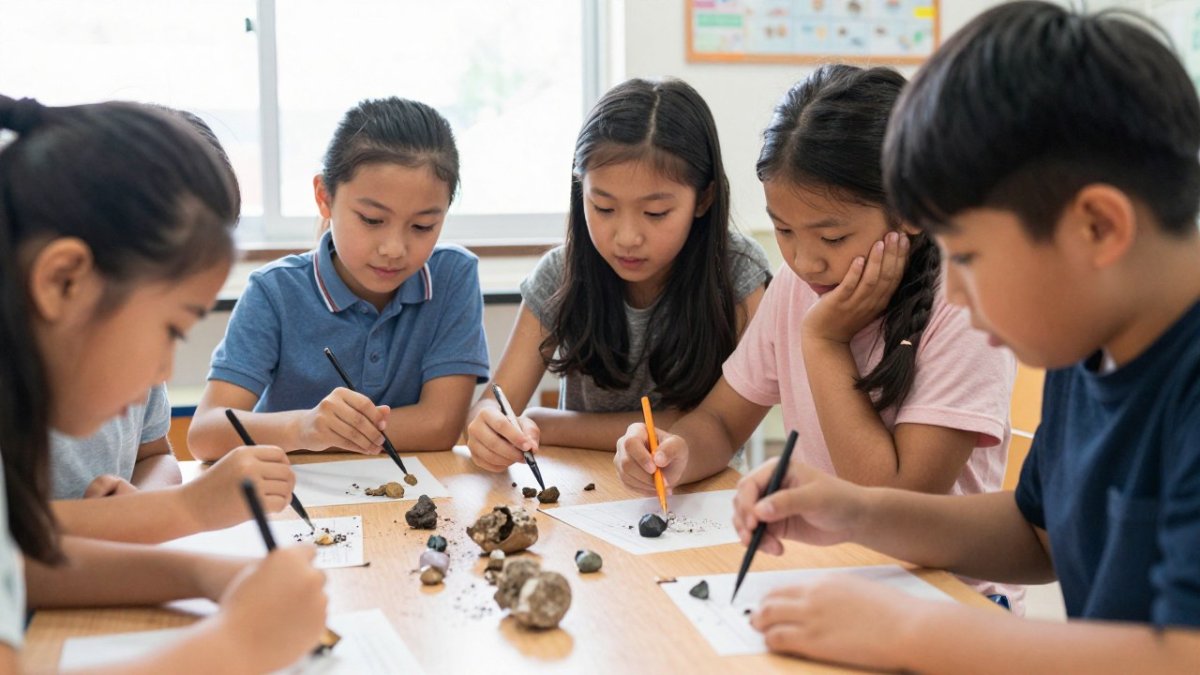
For a full planning walkthrough, see our guide on how to plan hands-on science activities for elementary students.
Science lessons land hardest when children can touch what they are learning about. Dinosaurs Rock brings genuine museum-grade fossils, gemstones, and interactive exhibits straight to your school, party, or group. Every child digs up and keeps real specimens, and our life-size, moving dinosaur exhibits keep kids engaged from start to finish. With over 10 million participants across 27 years, our programs have reached a large audience. Contact Dinosaurs Rock at (917) 375-4248 for current programs and a quote.
Frequently Asked Questions
Why is hands-on learning important in science?
Hands-on learning lets kids test ideas instead of just reading about them. When children touch real specimens, run experiments, and record what happens, abstract scientific concepts become concrete. That active discovery process builds critical thinking and problem-solving skills and helps students remember what they learned long after the lesson ends. It also reduces science anxiety because kids learn by doing rather than memorizing.
What are some examples of hands-on science activities for elementary students?
Common examples include digging and identifying real fossils, sorting gemstones by properties, building simple circuits, testing which materials float, and running hypothesis testing with everyday items. Programs like Dinosaurs Rock bring museum-grade specimens so kids can handle genuine fossils and keep what they find.
How do hands-on science activities support student learning and engagement?
Student engagement rises when kids are active participants rather than passive listeners. Hands-on experiments in science encourage curiosity, collaborative learning, and student-centered instruction, all of which support stronger academic performance. Research on experiential learning shows that manipulating real objects aids cognitive development and conceptual understanding. The result is deeper scientific literacy and student motivation that carries into other subjects.

